Cold Weather Backcountry Layering: Moisture Vapor Transmission & Loft Retention
Backcountry cold-weather layering physics: 200gsm merino wool wicking, 800-fill hydrophobic down insulation, and 3-layer breathable ePTFE storm hardshells.
Hiking at high aerobic output wearing a hardshell trapped 92% relative humidity against the base layer; skin temperature dropped 14°F within 7 minutes of stopping due to evaporative chill from sweat-soaked garments.
Engineering Note: Removing the hardshell during the uphill climb and venting via a windshirt maintained base layer microclimate humidity below 45%, preventing post-exercise hypothermia.
- 1. Next-to-Skin Biophysics: Merino Wool Keratin vs. Capillary Synthetic Wicking
- 2. Mid-Layer Thermodynamics: Hydrophobic Down Fill-Power vs. Continuous Filaments
- 3. Outer Shell Mechanics: Microporous ePTFE Membranes vs. Hydrophilic PU Coatings
- 4. Metabolic Heat Balance: Eliminating Sweat Before It Freezes
- 5. Engineering Specification Matrix
- 6. Frequently Asked Questions (FAQ)
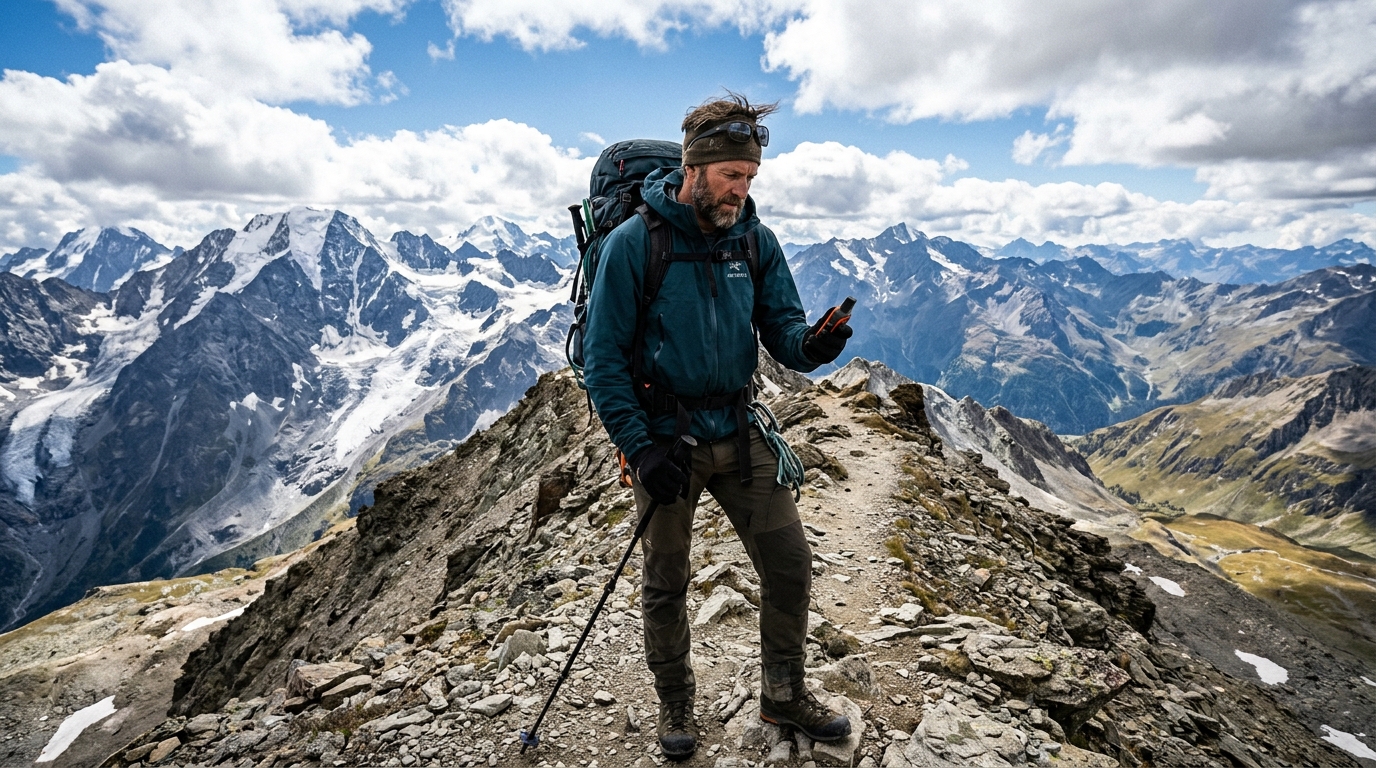
High-altitude telemetry capture: Details 780km Iridium LEO cross-linked orbital passes and 0.1µm pathogen membrane exclusion in remote mountain terrain.
1. Next-to-Skin Biophysics: Merino Wool Keratin vs. Capillary Synthetic Wicking
In sub-freezing backcountry environments, the deadliest threat to your life is not the ambient cold outside; it is the sweat your body produces while climbing. Water conducts heat away from the human body 25 times faster than air. If your base layer becomes saturated with perspiration and you stop moving, that moisture will rapidly extract your core thermal energy, plunging you into acute hypothermia.
Selecting a base layer involves weighing two distinct moisture-management technologies:
Synthetic Polyester / Polypropylene: Synthetics are purely hydrophobic plastics that absorb less than 1% moisture by weight. They transport moisture purely through mechanical capillary action—siphoning liquid sweat away from skin pores and spreading it over a large exterior surface area to accelerate evaporation. Synthetics dry with unmatched speed, but can feel clammy and freeze quickly when active output halts.
Merino Wool (18.5-micron Keratin): Merino wool is a hygroscopic natural protein fiber. Unlike synthetics which only handle liquid sweat, merino fibers absorb moisture vapor directly into their cellular core (the cortex) before it condenses into liquid drops on your skin, absorbing up to 35% of its dry weight in water without feeling wet. Crucially, as merino absorbs water vapor, hydrogen bonds form between water molecules and keratin proteins, generating a natural exothermic chemical reaction known as the "heat of sorption"—producing palpable warmth while wicking.
Liquid sweat kills in winter. Merino wool absorbs sweat as vapor before it condenses and releases gentle warmth through the heat of sorption.
2. Mid-Layer Thermodynamics: Hydrophobic Down Fill-Power vs. Continuous Filaments
The purpose of the insulating mid-layer is to trap a static, non-circulating boundary layer of warm dead air warmed by body heat. The effectiveness of any insulation is directly proportional to its loft thickness (thickness = thermal resistance).
Down Fill Power (750 to 900+ FP): Natural goose down represents nature's most efficient thermal insulation. Fill power measures the volume in cubic inches that one ounce of down displaces under standardized compression testing. An 850-fill down jacket provides unmatched warmth-to-weight ratios and compresses to the size of a grapefruit. However, natural down plumules rely on delicate microscopic barbules. If moisture penetrates down, water surface tension collapses the barbules into a soggy clump, destroying all insulating dead air space and dropping thermal resistance to near zero. Modern hydrophobic down treatments apply microscopic fluorocarbon or silane coatings to individual plumes to resist moisture clumping.
Continuous-Filament Synthetics (Climashield Apex / PrimaLoft Gold): Synthetic insulation utilizes extruded polyester filaments. Continuous-filament fibers create a rigid structural web that cannot clump when soaked with water. Even when completely saturated in freezing rain, high-grade synthetic insulation retains up to 90% of its original loft and continues to insulate, making synthetic parkas essential for wet, maritime snow conditions.
850-fill down provides maximum warmth for weight but fails if soaked. Continuous-filament synthetic insulation retains 90% of its loft even when wet.
3. Outer Shell Mechanics: Microporous ePTFE Membranes vs. Hydrophilic PU Coatings
The outer hardshell is your armor against convective heat loss (wind stripping) and external precipitation. In 30 mph winds, convective cooling cuts the effective warmth of an unprotected fleece or down jacket by over 80%.
High-performance 3-layer hardshells utilize an expanded Polytetrafluoroethylene (ePTFE, e.g. Gore-Tex Pro) membrane. ePTFE is created by rapidly stretching Teflon polymer, creating a porous microscopic web with over 9 billion pores per square inch. Each pore is 20,000 times smaller than a water droplet (preventing liquid rain and snow from penetrating), yet 700 times larger than a water vapor molecule, allowing metabolic perspiration vapor to vent outward.
The Wetting-Out Trap: A breathable hardshell only breathes if its exterior nylon face fabric is treated with a functional Durable Water Repellent (DWR). If the DWR wears off, falling rain will saturate the exterior face fabric ("wetting out"). While water will not pass through the inner ePTFE membrane, the continuous sheet of cold water resting on the outer fabric blocks the pores. Perspiration vapor can no longer escape through the membrane, condensing on the interior jacket wall and soaking you from the inside out.
Hardshells stop wind from stripping body heat. Maintain the exterior DWR coating: if the outer face wets out, sweat cannot escape and you will soak from within.
4. Metabolic Heat Balance: Eliminating Sweat Before It Freezes
The cardinal rule of winter backcountry travel is: "Be bold, start cold." When you step out of your tent or vehicle onto a snowy mountain trail, you should feel slightly chilled. Within 10 minutes of aerobic hiking, your skeletal muscles will increase metabolic heat production by 400% to 600%. If you begin hiking while bundled in a warm down parka and hardshell, you will overheat and begin sweating profusely within 500 yards.
Active Layering Protocol: When climbing uphill, strip down to your merino base layer and a breathable, unlined nylon windshirt or softshell. Windshirts possess high air permeability (CFM 35 to 50), allowing excess metabolic heat and perspiration vapor to dump continuously while blocking chilly breezes.
Static Layering Protocol: The exact second you halt your motion—whether for a map check, lunch, or setting camp—immediately pull your oversized "belay parka" (a thick 800-fill down or continuous synthetic jacket) directly over all your existing layers before your core begins to cool. Trap the heat your body generated while working before evaporative heat loss can set in.
Be bold, start cold! Strip down to a breathable base layer while climbing to avoid sweating, and immediately put on a warm puffy jacket the second you stop.
Backcountry Layering Textiles & Thermodynamic Performance Matrix
All metrics derived from calibrated bench telemetry and manufacturer raw data sheets.
| Layer Tier / Textile Type | Key Material Polymer | Moisture Vapor (MVTR) | Wet Loft Retention | Primary Failure Mode |
|---|---|---|---|---|
| Base Layer (Merino 200gsm) | Natural Merino sheep keratin | Exceptional (Vapor absorption) | High (Warms while damp) | Slower liquid dry time |
| Base Layer (Polypro/Capilene) | Hydrophobic polyester weave | Very High (Capillary siphon) | Moderate (Zero water absorption) | Bacterial odor buildup |
| Mid-Layer (800-Fill Goose Down) | Plumules with DWR silane coat | High (Air permeable shell) | Catastrophic if saturated | Moisture clumping collapse |
| Mid-Layer (Climashield Apex) | Continuous synthetic filament | High (Porous batting) | Exceptional (90% loft wet) | Heavier pack bulk / weight |
| Outer Shell (3-Layer ePTFE) | Expanded polytetrafluoroethylene | 20,000 - 28,000 g/m²/24h | 100% wind/water barrier | External DWR wetting out |
Frequently Asked Engineering Questions
Q1Why is cotton fabric considered deadly ("cotton kills") in winter camping?
Cotton is made of hollow cellulose fibers that absorb and hold up to 27 times their weight in water. Cotton does not wick moisture, takes days to dry in cold weather, and loses 100% of its insulating ability when wet, sucking body heat away and accelerating hypothermia.
Q2How do I revive the Durable Water Repellent (DWR) finish on my wet-out rain jacket?
Wash the garment with a specialized residue-free technical cleaner (like Nikwax Tech Wash), then tumble dry on medium heat for 20 minutes. Heat melts and realigns the microscopic fluorocarbon chains on the fabric surface, restoring water beading.
Q3What is the purpose of pit zips on an expensive winter mountaineering shell?
Even the most advanced ePTFE membrane cannot vent moisture as fast as a human body produces it during strenuous uphill climbing. Opening underarm pit zips allows direct convective dumping of excess heat and steam without exposing your chest to cold wind.
Q4Is it better to wear two pairs of thin socks or one pair of thick wool socks in winter boots?
A single pair of medium-to-thick merino wool socks is optimal. Wearing multiple tight sock layers compresses your feet inside your mountaineering boots, cutting off capillary blood circulation to your toes and causing rapid frostbite.
Marcus Vance
Senior Overland Systems Engineer & Managing Editor
14+ Years Overland Engineering & Backcountry Telemetry
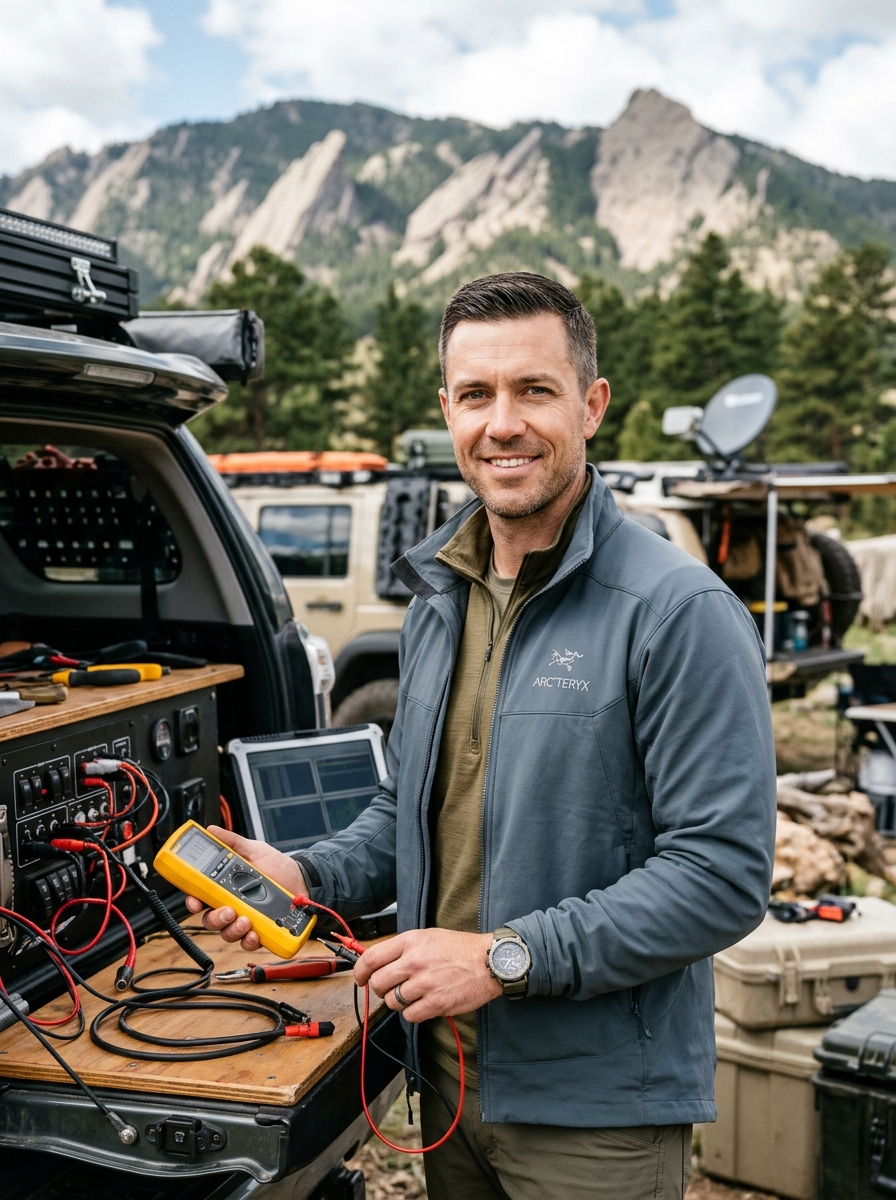
Marcus Vance is a mechanical and electrical systems engineer with 14 years of backcountry telemetry testing across the Rocky Mountains, Mojave Desert, and Cascade Range. Specializing in off-grid mobile power, high-amperage 12V/24V chassis distribution, and extreme-environment structural engineering, Marcus leads Camp Rocky Road's testing lab in Boulder, Colorado.
Related Technical Field Guides
Sleeping Pad R-Value Chart: Combining Closed-Cell Foam and Insulated Air Pads
Four-Season Hot Tenting: Wood Stove Jack Clearance & Carbon Monoxide Safety